
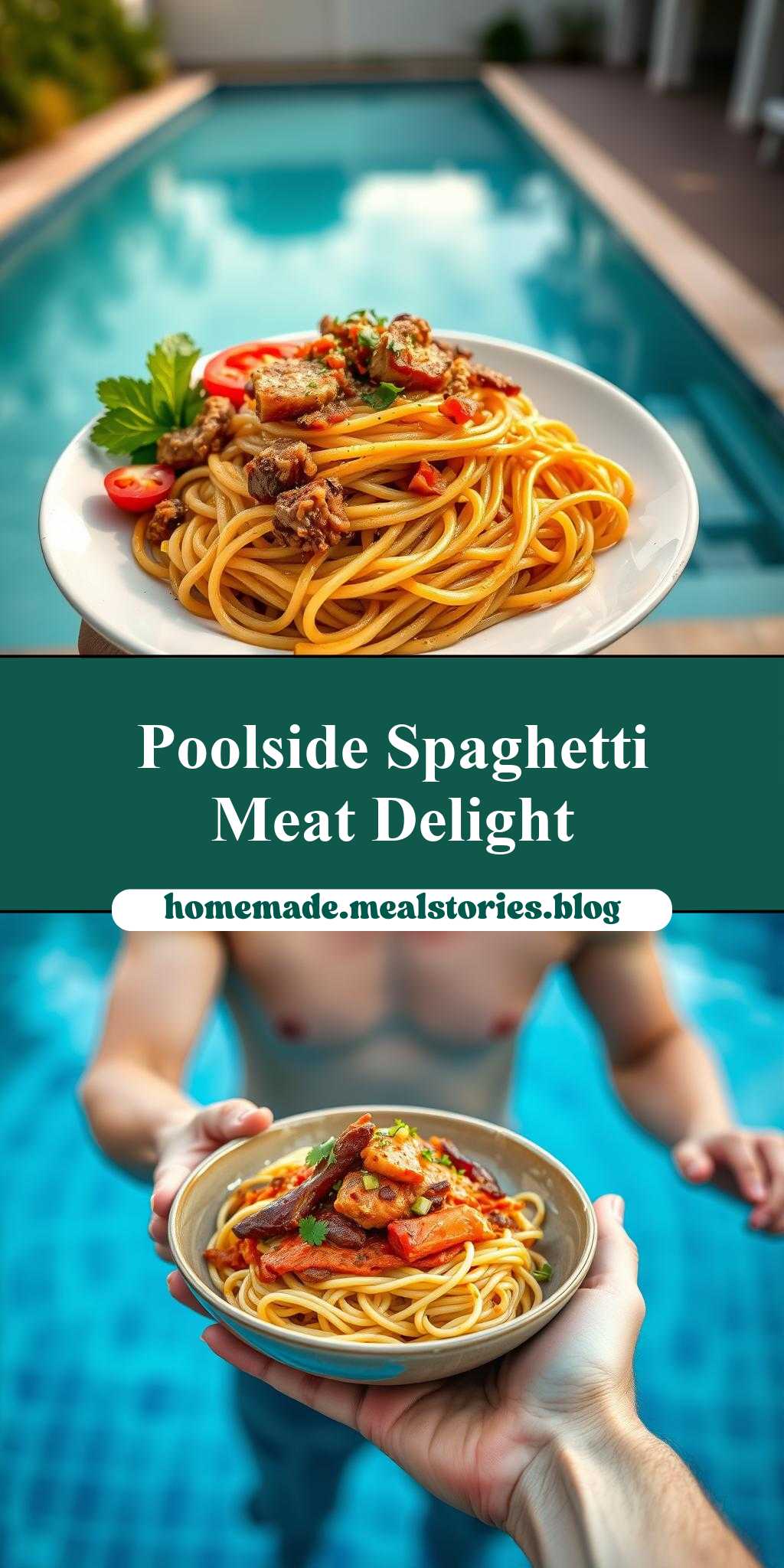
What’s the perfect poolside meal? A hearty bowl of homemade spaghetti with tender ground beef and sautéed vegetables, made easy with a quick weeknight dinner recipe. Save this idea for a delicious family favorite to enjoy anytime.
a person holding a bowl of spaghetti with meat and vegetables on top, in front of a swimming pool
Introduction
Imagine a warm summer day, lounging by the pool, and savoring a delicious bowl of spaghetti loaded with juicy meat and an assortment of colorful vegetables. This dish is not just a meal; it’s an experience that combines ease, flavor, and creativity, all using everyday ingredients that you might already have in your pantry. The beauty of this recipe lies in its simplicity and versatility, allowing you to tailor it to your tastes and dietary preferences with minimal effort. Whether you’re a busy professional looking for a quick dinner solution or a parent seeking a meal that will please both kids and adults, this spaghetti with meat and vegetables is sure to become a favorite.
Why This Works
- Flavor balance and ingredient accessibility: The combination of savory meat, tangy tomato sauce, and a variety of vegetables creates a balanced flavor profile that is both satisfying and healthy. Moreover, the ingredients are easily accessible in most supermarkets, making this dish convenient to prepare.
- Ease of preparation: The recipe is straightforward and requires minimal cooking skills, making it perfect for beginners or those short on time. The steps are simple: cook the spaghetti, prepare the meat and vegetable mixture, and combine everything together.
- Impressive results with minimal effort: Despite its simplicity, the dish presents well and can be served at casual gatherings or special occasions. The vibrant colors of the vegetables and the savory aroma of the meat sauce are sure to impress your guests.
Key Ingredients
The main ingredients for this recipe include spaghetti, ground meat (beef, pork, or a combination of the two), onions, bell peppers, tomatoes (canned or fresh), garlic, olive oil, salt, pepper, and any other vegetables of your choice (such as mushrooms, zucchini, or carrots). For practical substitutions, you can use different types of pasta, such as linguine or fettuccine, and vary the meat with ground turkey, chicken, or vegetarian options like tofu or tempeh. The versatility of this dish allows you to get creative with the ingredients based on what you have available and your personal preferences.
Instructions
- Step 1: Begin by preparing your ingredients. Chop the onions, bell peppers, and any other vegetables you’re using. Mince the garlic to release its flavor. Measure out the spaghetti and have the canned tomatoes ready if using.
- Step 2: Cook the spaghetti in boiling, salted water until it’s al dente. Reserve a cup of pasta water before draining the spaghetti, as this can be used later to achieve the perfect sauce consistency.
- Step 3: In a large skillet, heat the olive oil over medium heat. Add the chopped onions and cook until they’re translucent, then add the minced garlic and cook for another minute, ensuring not to burn the garlic. Add the ground meat, breaking it up with a spoon as it cooks, until it’s fully browned. Then, add the chopped bell peppers and other vegetables, cooking until they’re tender. Finally, add the canned tomatoes (or fresh tomatoes with a bit of water), salt, and pepper, stirring well to combine. Let the sauce simmer for at least 10-15 minutes, allowing the flavors to meld together.
- Step 4: To serve, place the cooked spaghetti in a bowl, spoon the meat and vegetable sauce over the top, and finish with any desired toppings, such as grated Parmesan cheese, fresh basil leaves, or a drizzle of extra virgin olive oil.
Handy Tips
- When cooking the spaghetti, make sure to stir it occasionally to prevent the pasta from sticking together. Also, don’t overcook the spaghetti, as it should retain a bit of firmness in the center.
- For the meat sauce, use lean ground meat to avoid excess fat, and don’t hesitate to add other spices or herbs to tailor the flavor to your liking. A pinch of sugar can help balance the acidity of the tomatoes, while a sprinkle of dried basil can enhance the Italian flavor profile.
- Consider preparing the sauce in advance and refrigerating or freezing it for later use. This can save time during busy weekdays and ensure that you always have a delicious meal ready to go.
Heat Control
When cooking the meat sauce, it’s essential to control the heat to prevent burning. Start with medium heat to cook the onions and garlic, then reduce the heat to low once you add the ground meat to prevent it from cooking too quickly. When the sauce is simmering, ensure that it’s at a gentle bubble; this will help the flavors meld together without the sauce reducing too much. For the spaghetti, a rolling boil is necessary, but once it’s cooked, drain it promptly to stop the cooking process.
Crunch Factor
The crunch factor in this dish comes from the vegetables, such as bell peppers and onions, which should be cooked until they’re tender but still retain a bit of crunch. This texture contrast adds depth to the dish, making it more engaging to eat. To achieve the perfect crunch, don’t overcook the vegetables, and consider adding some raw vegetables on top as a garnish for extra freshness and texture.
Pro Kitchen Tricks
- Use a mixture of ground meats for a more complex flavor profile. Combining beef and pork, for example, can create a richer, more satisfying taste experience.
- Acidity, such as a squeeze of fresh lemon juice, can brighten the flavors of the dish. Add it towards the end of cooking to prevent the flavors from becoming muted.
- For an extra creamy sauce, consider adding a spoonful of tomato paste or a bit of heavy cream towards the end of the simmering time. This will enrich the sauce and provide a luxurious feel to the dish.
Storage Tips
- Leftover spaghetti with meat sauce can be stored in the refrigerator for up to 3 days. Reheat it gently over low heat, adding a bit of water if the sauce has thickened too much.
- For longer storage, consider freezing the sauce separately from the cooked spaghetti. Frozen sauce can be kept for up to 3 months. When you’re ready to eat it, thaw the sauce overnight in the refrigerator, then reheat and serve over freshly cooked spaghetti.
- Use airtight containers to store leftovers, ensuring that the food remains fresh and is protected from other odors in the refrigerator or freezer.
Gift Packaging Ideas
While spaghetti with meat sauce might not be the first dish that comes to mind when thinking of gifts, it can actually be a thoughtful and practical present, especially for new parents, students, or anyone going through a busy period. Consider packaging the sauce in decorative jars, along with a box of spaghetti and a sprinkle of Parmesan cheese, and include a recipe card with instructions. You could also prepare individual portions in microwave-safe containers for a quick and easy meal on the go. Add a personal touch with a handmade ribbon or a note with cooking tips, and you have a gift that is both delicious and considerate.
Flavor Variations
- Different spices: Experiment with various herbs and spices to give your dish a unique twist. For example, adding a bit of cumin and chili powder can give it a Mexican flair, while oregano and thyme can enhance the Italian flavors.
- Creative toppings: Don’t be limited to traditional toppings like Parmesan cheese and basil. Consider adding other cheeses, such as mozzarella or feta, or toppings like roasted vegetables, grilled chicken, or even a fried egg for added richness.
- Ingredient swaps: Swap the ground meat with sautéed mushrooms for a vegetarian option, or use different types of protein like ground turkey or tofu for a leaner meal. You can also substitute the spaghetti with other pasta shapes or even zucchini noodles for a low-carb alternative.
Troubleshooting
- Texture problems: If the sauce becomes too thick, add a bit of the reserved pasta water. If it’s too thin, simmer it for a few more minutes to reduce the liquid. For the spaghetti, if it becomes too mushy, it’s likely overcooked, so adjust your cooking time accordingly.
- Ingredient replacements: If you’re missing an ingredient, consider what else you have in your pantry that could serve as a substitute. For example, if you don’t have canned tomatoes, you could use fresh tomatoes cooked down with a bit of water, or even a combination of tomato paste and water as a last resort.
- Over/undercooking signs: Keep an eye on your spaghetti’s texture and the sauce’s consistency. Undercooked spaghetti will be hard in the center, while overcooked spaghetti will be mushy. The sauce should simmer gently; if it’s boiling too vigorously, it may become too thick or even burn.
FAQs
- Can I freeze it? Yes, you can freeze the meat sauce for up to 3 months. It’s best to freeze it without the spaghetti to preserve the texture of the pasta.
- Is it gluten-free? Traditional spaghetti contains gluten, but you can easily make this dish gluten-free by substituting the spaghetti with gluten-free pasta made from rice, quinoa, or corn.
- Can I double the recipe? Absolutely, this recipe can be doubled or even tripled if you’re serving a larger crowd. Just ensure that you have a large enough pot to cook the spaghetti and a big skillet to handle the increased amount of sauce.
Conclusion
This recipe for spaghetti with meat and vegetables is a versatile and delicious meal solution that can be adapted to suit any taste or dietary need. With its rich flavors, satisfying texture, and ease of preparation, it’s no wonder this classic dish remains a favorite around the world. Whether you’re a seasoned chef or just starting to explore the world of cooking, this recipe is sure to become a staple in your kitchen. So go ahead, get creative with the ingredients, and enjoy the process of cooking a meal that will bring joy and nourishment to you and your loved ones.