
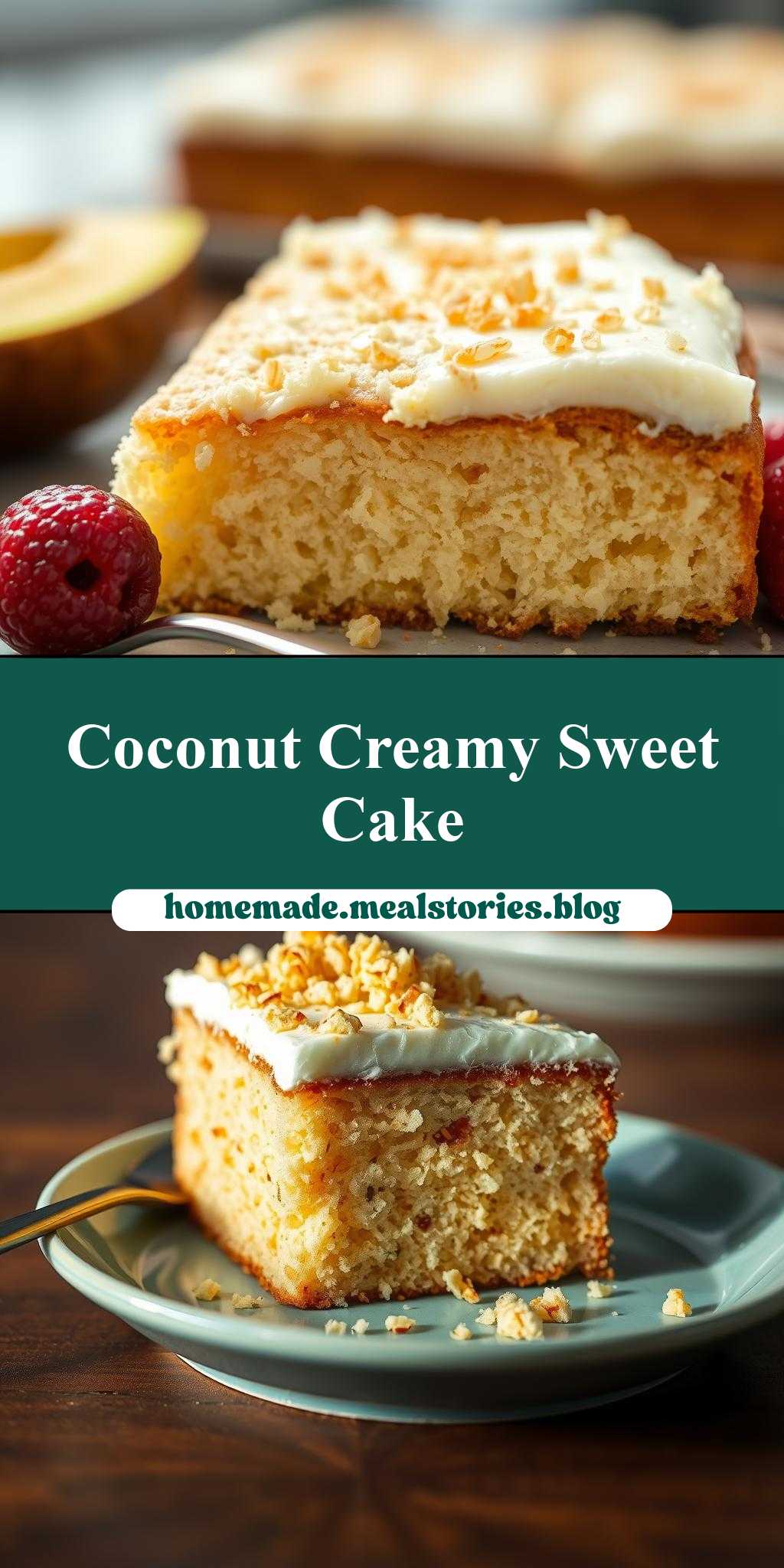
What makes a perfect coconut cake recipe so irresistible? This moist and flavorful homemade treat is a family favorite, made easy with shredded coconut and a simple mixing method. Save this idea for a quick dessert solution anytime.
COCONUT CAKE RECIPE
Introduction
Welcome to the world of tropical bliss with our Coconut Cake Recipe, a masterpiece that combines the simplicity of everyday ingredients with the creativity of a professional baker. This moist and flavorful cake is not only a delight to the taste buds but also surprisingly easy to make, requiring minimal effort for a show-stopping result. Whether you’re a seasoned baker looking for a new challenge or a beginner seeking a versatile recipe to impress, this coconut cake is sure to become a favorite. With its perfect balance of coconut, sweetness, and freshness, it’s ideal for any occasion, from casual gatherings to special celebrations.
Why This Works
- Flavor balance and ingredient accessibility: The combination of coconut flakes, coconut milk, and a hint of vanilla provides a rich, well-rounded flavor profile that’s both unique and approachable. The ingredients are easily found in most grocery stores, making this recipe accessible to anyone.
- Ease of preparation: Despite its impressive outcome, this coconut cake recipe is surprisingly straightforward. The steps are simple, and the preparation time is relatively short, making it a great option for those with busy schedules.
- Impressive results with minimal effort: The end result is a beautifully textured cake with a stunning presentation, perfect for impressing friends and family without requiring extensive baking experience.
Key Ingredients
The heart of this coconut cake lies in its key ingredients. You’ll need:
– 1 1/2 cups of unsweetened shredded coconut for the cake and additional toasted coconut for garnish.
– 1 cup of coconut milk, which adds moisture and a deep coconut flavor.
– 2 teaspoons of vanilla extract for a subtle sweetness and depth.
– 2 1/4 cups of all-purpose flour as the base of the cake.
– 1 teaspoon of baking powder to ensure the cake rises beautifully.
– 1/2 teaspoon of salt to balance the sweetness.
– 1 cup of unsalted butter, softened, for creaming with sugar.
– 1 3/4 cups of granulated sugar to provide the necessary sweetness.
– 3 large eggs at room temperature, which are crucial for the cake’s structure and moisture.
For practical substitutions, you can use other types of milk if coconut milk is not available, though this will slightly alter the flavor. Additionally, if you prefer a lighter coconut flavor, you can reduce the amount of shredded coconut.
Instructions
- Step 1: Begin by preheating your oven to 350°F (180°C). Prepare two 9-inch round cake pans by greasing them and lining the bottoms with parchment paper. In a medium bowl, whisk together the flour, baking powder, and salt. Set aside.
- Step 2: In a large mixing bowl, use an electric mixer to cream the softened butter and granulated sugar until light and fluffy, about 3 minutes. Beat in the eggs one at a time, allowing each egg to fully incorporate before adding the next. Beat in the vanilla extract.
- Step 3: With the mixer on low speed, gradually add the flour mixture to the wet ingredients in three parts, alternating with the coconut milk, beginning and ending with the flour mixture. Beat just until combined. Stir in the unsweetened shredded coconut.
- Step 4: Divide the batter evenly between the prepared pans and smooth the tops. Bake for 25-30 minutes or until a toothpick inserted into the center of each cake comes out clean. Allow the cakes to cool in the pans for 5 minutes before transferring them to a wire rack to cool completely.
Handy Tips
- To ensure your cake is moist, don’t overmix the batter, and make sure to not overbake. A toothpick inserted into the center should come out clean or with a few moist crumbs.
- For a more intense coconut flavor, you can toast the coconut flakes in a 350°F oven for 5-7 minutes, stirring frequently, until lightly browned and fragrant.
- Always use room temperature ingredients, especially the eggs and butter, for a better emulsion and a lighter cake texture.
Heat Control
Maintaining the right oven temperature is crucial for this recipe. Ensure your oven is at a true 350°F (180°C) for even baking. The cakes are done when they’re lightly golden on top and a toothpick inserted into the center comes out clean. Avoid opening the oven door too frequently during the baking time, as this can cause the cakes to sink or not bake evenly.
Crunch Factor
The crunch factor in this coconut cake comes from the toasted coconut flakes used as a garnish. To achieve a perfect crunch, spread the coconut flakes on a baking sheet and toast them in the oven at 350°F (180°C) for about 5-7 minutes, stirring every minute or two, until they’re lightly browned. Keep an eye on them, as they can quickly go from perfectly toasted to burnt.
Pro Kitchen Tricks
- Use buttermilk or a buttermilk substitute (mixing 1 cup of milk with 1 tablespoon of white vinegar or lemon juice and letting it sit for 5-10 minutes) instead of regular milk for an extra moist cake.
- Don’t overmix the batter, as this can lead to a dense cake. Stop mixing as soon as the ingredients come together in a cohesive batter.
- For a beautiful presentation, once the cakes are completely cool, you can frost them with a cream cheese frosting or a simple powdered sugar glaze, and then sprinkle toasted coconut flakes on top.
Storage Tips
- The coconut cake can be stored at room temperature for up to 3 days. It’s best to keep it in an airtight container to maintain freshness.
- For longer storage, the cake can be refrigerated for up to 5 days or frozen for up to 2 months. When freezing, it’s best to wrap the cake tightly in plastic wrap or aluminum foil and place it in a freezer-safe bag.
- When reheating, you can thaw the cake overnight in the refrigerator and then let it come to room temperature, or thaw it more quickly by wrapping it in microwave-safe plastic wrap and heating it in short intervals, checking until it’s warmed through.
Gift Packaging Ideas
This coconut cake makes a wonderful gift for friends, family, or coworkers. Consider packaging it in a decorative cake box or wrapping it in colorful cellophane and tying it with a ribbon. For a more rustic look, you can place slices of the cake on a decorative plate or platter and cover them with plastic wrap or aluminum foil, secured with a ribbon or twine. Don’t forget to include a personal note or card to make the gift even more special.
Flavor Variations
- Different spices: Add a pinch of salt, a teaspoon of ground cinnamon, or a half teaspoon of ground nutmeg to the batter for added depth.
- Creative toppings: Instead of toasted coconut flakes, try using chopped nuts, shredded chocolate, or dried fruit to top your cake.
- Ingredient swaps: Use almond flour instead of all-purpose flour for a gluten-free version, or substitute the granulated sugar with honey or maple syrup for a different flavor profile.
Troubleshooting
- Texture problems: If your cake turns out too dense, it might be due to overmixing the batter. If it’s too dry, it could be overbaked or made with ingredients that are too cold.
- Ingredient replacements: Always try to use the ingredients called for in the recipe, but if you need to make substitutions, do so sparingly and with similar ingredients to avoid altering the cake’s structure or flavor.
- Over/undercooking signs: Keep an eye on your cake while it bakes. It should be lightly golden on top and a toothpick inserted into the center should come out clean. If the toothpick comes out with wet batter, it needs more time. If the top starts to brown too quickly, cover the cake with foil to prevent overbrowning.
FAQs
- Can I freeze it? Yes, the coconut cake can be frozen for up to 2 months. Wrap it tightly in plastic wrap or aluminum foil and place it in a freezer-safe bag.
- Is it gluten-free? The original recipe is not gluten-free due to the use of all-purpose flour. However, you can make a gluten-free version by substituting the flour with almond flour or another gluten-free flour blend.
- Can I double the recipe? Yes, you can double the recipe to make a larger cake. Just keep in mind that you’ll need to adjust the baking time accordingly. A larger cake will take longer to bake, so check it frequently to avoid overcooking.
Conclusion
With its unique blend of coconut flavor, moist texture, and beautiful presentation, this coconut cake recipe is sure to become a staple in your baking repertoire. Whether you’re baking for a special occasion or just a casual gathering, this cake is versatile and sure to impress. Don’t be afraid to experiment with different flavors and toppings to make the recipe your own, and enjoy the process of creating something truly special. Happy baking, and we look forward to hearing about your coconut cake adventures!
COCONUT CAKE RECIPE
A moist and flavorful coconut cake recipe perfect for any occasion, with a balance of coconut, sweetness, and freshness.
🥘 Ingredients
👩🍳 Instructions
-
1Preheat the oven to 350°F (180°C). Prepare two 9-inch round cake pans.
-
2Whisk together the flour, baking powder, and salt. Set aside.
-
3Cream the butter and sugar until light and fluffy. Beat in the eggs one at a time, then beat in the vanilla extract.
-
4With the mixer on low speed, gradually add the flour mixture to the wet ingredients in three parts, alternating with the coconut milk. Stir in the unsweetened shredded coconut.
-
5Divide the batter evenly between the prepared pans and smooth the tops. Bake for 25-30 minutes or until a toothpick inserted into the center of each cake comes out clean.