
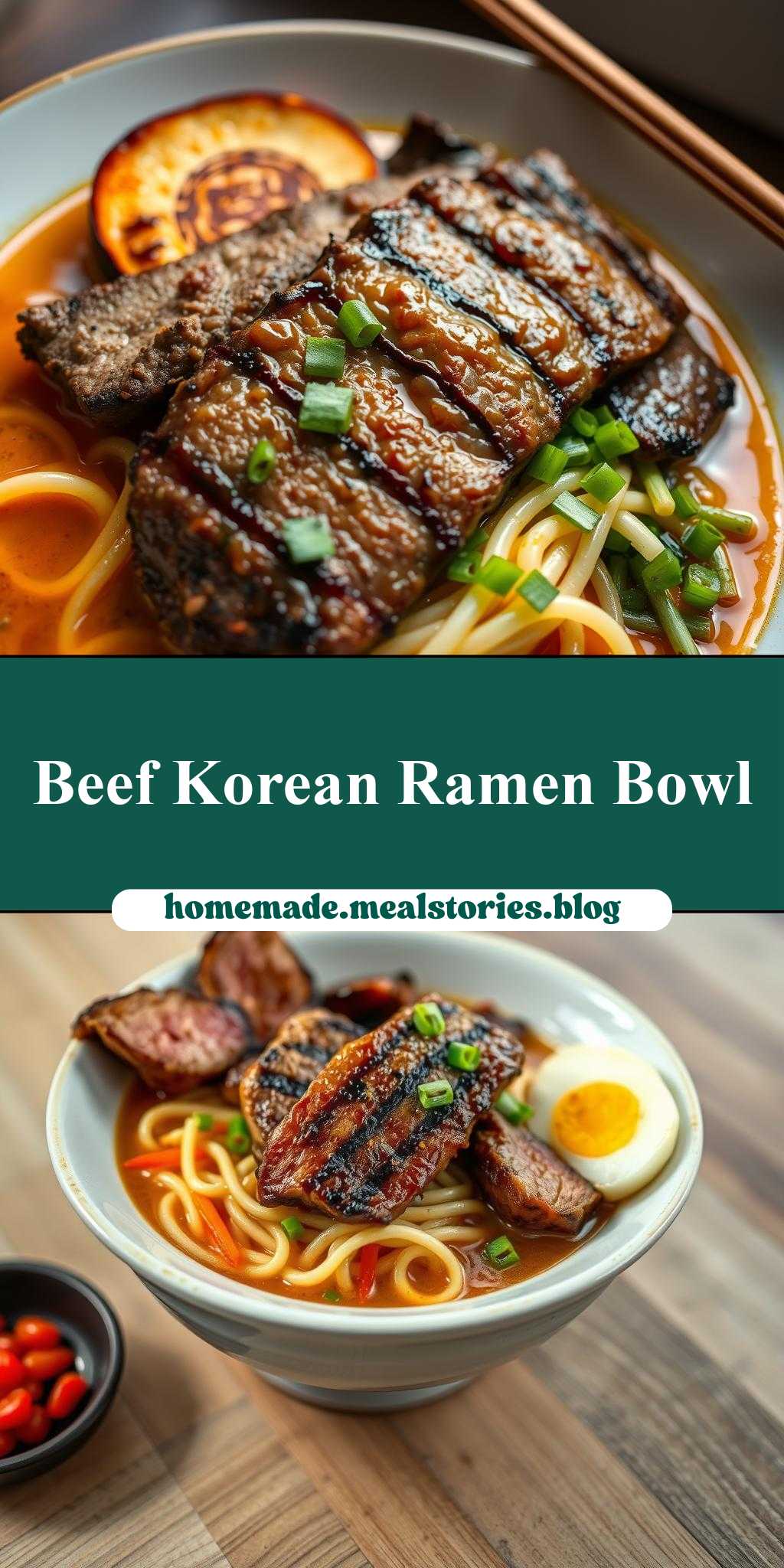
What sets your favorite ramen apart from an unforgettable one – is it the rich flavor of grilled beef? This easy homemade Korean ramen recipe is a weeknight dinner game changer, loaded with tender grilled beef and steaming hot noodles, perfect for a quick family favorite meal. Save this idea for a delicious twist on a classic dish.
Grilled Beef Korean Ramen Recipe
Introduction
This Grilled Beef Korean Ramen Recipe is a masterclass in balancing flavors and textures, all while using everyday ingredients that you might already have in your pantry. The beauty of this dish lies in its simplicity and the depth of flavor it achieves with minimal effort. By combining the richness of grilled beef with the comforting warmth of a Korean-inspired ramen broth, topped with an assortment of colorful vegetables and finished with a sprinkle of toasted sesame seeds, you’ll create a meal that’s not only satisfying but also visually appealing. Whether you’re a fan of spicy foods, a lover of noodle dishes, or simply looking to elevate your weeknight dinners, this recipe is sure to become a staple in your culinary repertoire.
Why This Works
- Flavor balance and ingredient accessibility: This recipe succeeds in bringing together a variety of flavors, from the savory beef and umami broth to the freshness of green onions and the spiciness of gochujang, making it appealing to a wide range of palates. Moreover, it utilizes ingredients that are easily found in most supermarkets, making it highly accessible.
- Ease of preparation: Despite its complex flavor profile, this dish is surprisingly easy to prepare. The steps are straightforward, and the ingredients are simple to work with, even for those who are new to cooking.
- Impressive results with minimal effort: One of the most compelling aspects of this recipe is the impressive presentation and flavor it yields with relatively minimal effort. It’s perfect for special occasions or everyday meals when you want to make a good impression without spending hours in the kitchen.
Key Ingredients
The foundation of this Grilled Beef Korean Ramen Recipe includes high-quality beef (such as ribeye or sirloin), Korean chili flakes (gochugaru), gochujang (Korean chili paste), ramen noodles, vegetable oil, garlic, ginger, soy sauce, sesame oil, and an assortment of vegetables like mushrooms, carrots, and green onions. For those looking for substitutions, chicken or pork can be used in place of beef, and various types of noodles can substitute ramen if needed. Additionally, adjusting the amount of gochujang and gochugaru allows you to tailor the spice level to your liking.
Instructions
- Step 1: Begin by preparing your ingredients. Slice the beef into thin strips and season with a mixture of soy sauce, sesame oil, garlic, and ginger. Let it marinate for at least 30 minutes to allow the flavors to penetrate the meat. Meanwhile, chop the vegetables and set them aside.
- Step 2: Cook the ramen noodles according to the package instructions and set them aside. In a large pot, combine the beef broth, gochujang, soy sauce, and sesame oil to make the ramen broth. Bring it to a simmer and let it cook for about 10 minutes, allowing the flavors to meld together.
- Step 3: Grill the marinated beef strips until they are cooked to your desired level of doneness. For medium-rare, this should take about 3-4 minutes per side. Once the beef is cooked, let it rest for a few minutes before slicing it thinly against the grain.
- Step 4: To assemble the dish, place a portion of the cooked noodles into a bowl, add sliced beef, and then ladle the hot ramen broth over the top. Finish with your choice of vegetables, a sprinkle of toasted sesame seeds, and a drizzle of additional sesame oil if desired.
Handy Tips
- For an added depth of flavor, use a combination of beef broth and dashi (a traditional Japanese broth) for the ramen broth. Dashi can be made with kombu (seaweed) and katsuobushi (dried and fermented bonito flakes).
- Experiment with different types of protein and vegetables to make the dish your own. Tofu, for example, can be a great substitute for beef for a vegetarian version.
- Don’t overcook the noodles, as they will continue to cook a bit after being drained. Al dente texture is best for ramen.
Heat Control
When grilling the beef, it’s crucial to control the heat to achieve the perfect doneness. For a medium-rare, the internal temperature should be around 130°F to 135°F (54°C to 57°C). Use a meat thermometer to ensure accuracy. Additionally, when simmering the broth, reduce the heat to a low setting to prevent the flavors from becoming too concentrated or the broth from reducing too much.
Crunch Factor
Achieving the right texture in your Grilled Beef Korean Ramen is key to its enjoyment. The noodles should be slightly firm (al dente), the beef should be tender but still retain some chew, and the vegetables should add a satisfying crunch. To enhance the crunch factor, top your ramen with toasted sesame seeds, sliced green onions, and bean sprouts. For an extra crispy element, consider adding some fried shallots or garlic on top.
Pro Kitchen Tricks
- To enhance the umami flavor of the broth, add a teaspoon of mushroom extract or a few slices of dried shiitake mushrooms to the pot during the simmering process.
- For clearer broth, skim off any impurities that rise to the surface during cooking, and consider chilling the broth overnight and skimming off the fat that solidifies at the top before reheating and serving.
- Invest in a good-quality grill pan or skillet for grilling the beef. This will help achieve nice sear marks and a caramelized crust on the beef, which adds texture and flavor to the dish.
Storage Tips
- Leftover broth and cooked noodles can be stored in separate airtight containers in the refrigerator for up to 3 days. Reheat the broth gently over low heat and cook fresh noodles when ready to serve.
- Grilled beef can be refrigerated for up to 2 days. Slice it just before serving to prevent it from drying out.
- Consider freezing the broth for up to 3 months. It’s a great base for future meals and can be thawed and reheated as needed.
Gift Packaging Ideas
If you’re considering gifting this recipe, perhaps as a care package or a unique offering for a foodie friend, consider packaging the dry ingredients (noodles, spices, sesame seeds) in a decorative jar or bag, along with a printed recipe card and any desired toppings (dried vegetables, pickled ginger, etc.). For a more substantial gift, include a bottle of soy sauce, sesame oil, or gochujang to complement the dish.
Flavor Variations
- Different spices: Experiment with adding a pinch of cumin for a smoky depth or some ground cinnamon for a warm, aromatic flavor.
- Creative toppings: In addition to traditional toppings, consider adding boiled eggs, pickled radishes, or grilled portobello mushrooms to vary the texture and flavor.
- Ingredient swaps: For a vegetarian version, substitute the beef with extra-firm tofu marinated in a mixture similar to the beef. You can also swap out the beef broth for a vegetable broth for a lighter flavor.
Troubleshooting
- Texture problems: If the noodles become too mushy, it’s likely they were overcooked. For the next batch, cook them for a minute less and check for doneness. If the beef is too tough, it might have been overcooked or not sliced thinly enough against the grain.
- Ingredient replacements: If you can’t find gochujang, you can substitute it with a mixture of soy sauce, brown sugar, garlic, and gochugaru to approximate the flavor. For sesame oil, peanut oil or avocado oil can be used in a pinch, though they lack the distinct nutty flavor of sesame.
- Over/undercooking signs: Keep an eye on the beef’s internal temperature and the noodles’ texture to avoid overcooking. The broth should simmer gently; if it’s boiling too vigorously, reduce the heat to prevent flavor loss.
FAQs
- Can I freeze it? Yes, you can freeze the broth and cooked beef for up to 3 months. Noodles are best cooked fresh, but you can also freeze them after cooking; just be aware they might become slightly softer upon reheating.
- Is it gluten-free? This recipe can be adapted to be gluten-free by substituting the soy sauce with a gluten-free alternative and ensuring the beef broth and any store-bought ingredients are gluten-free.
- Can I double the recipe? Absolutely, this recipe can be easily doubled or tripled for larger groups. Just be sure to use a large enough pot for the broth and adjust the cooking time slightly for the beef if necessary.
Conclusion
This Grilled Beef Korean Ramen Recipe is a versatile and flavorful dish that combines the comfort of a warm bowl of noodles with the excitement of grilled beef and spicy Korean chili paste. With its balance of flavors, ease of preparation, and impressive presentation, it’s perfect for both special occasions and everyday meals. Feel free to experiment with the ingredients and toppings to make it your own, and don’t hesitate to share your creations with friends and family. Happy cooking, and enjoy the journey of culinary exploration that this recipe invites you to embark on!
Grilled Beef Korean Ramen Recipe
A flavorful and comforting dish combining grilled beef, Korean-inspired ramen broth, and an assortment of vegetables, perfect for special occasions and everyday meals.
🥘 Ingredients
👩🍳 Instructions
-
1Marinate the beef in a mixture of soy sauce, sesame oil, garlic, and ginger for at least 30 minutes.
-
2Cook the ramen noodles according to the package instructions and set aside.
-
3Combine the beef broth, gochujang, soy sauce, and sesame oil in a large pot and bring to a simmer.
-
4Grill the marinated beef until cooked to desired doneness, then slice thinly against the grain.
-
5Assemble the dish by placing noodles in a bowl, adding sliced beef, ladling the hot broth over the top, and finishing with desired vegetables and toppings.