
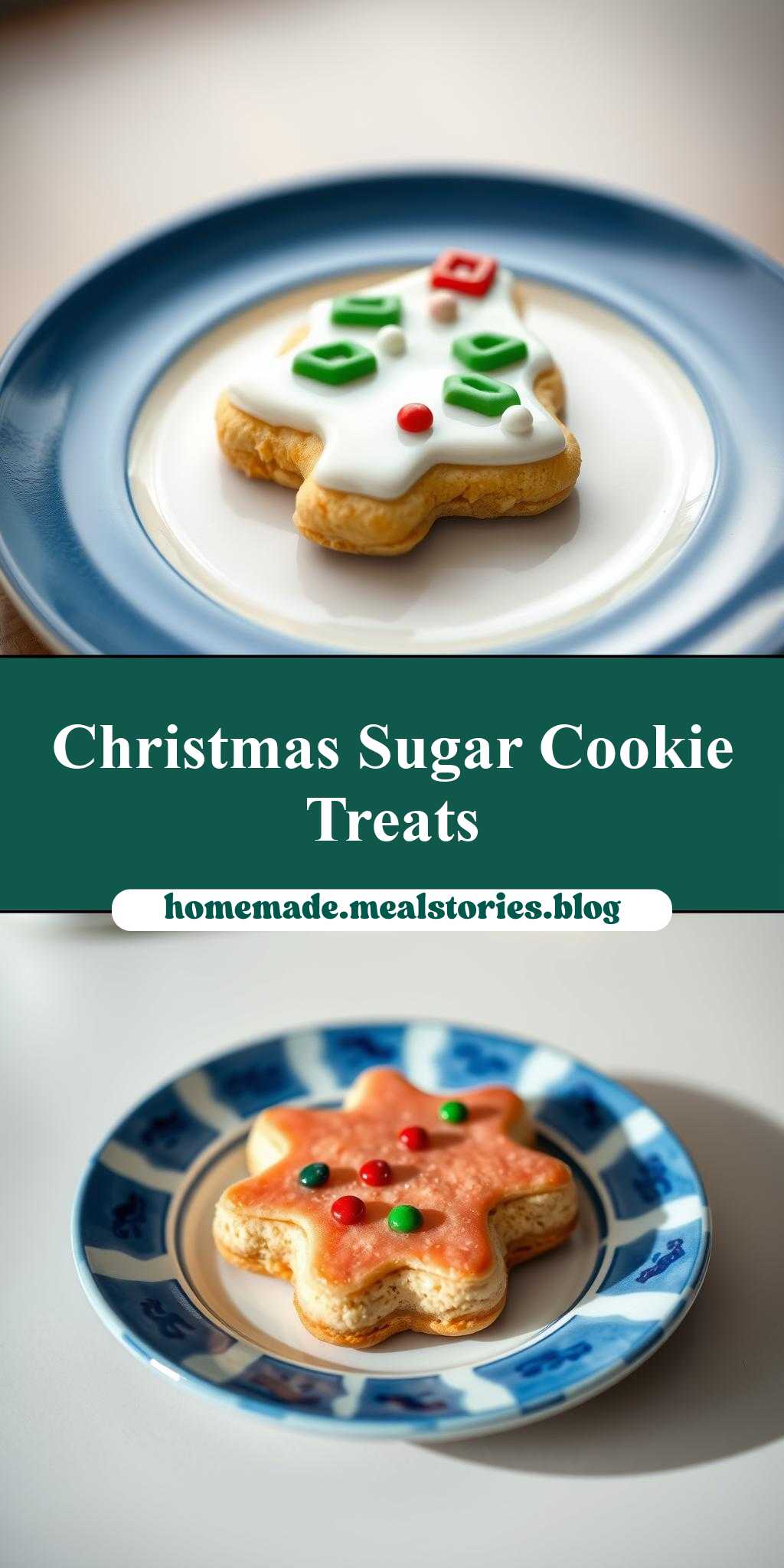
What makes a Christmas cookie truly special is the love that goes into decorating it, and these sweet treats are no exception, made with simple sugar cookie dough and royal icing, perfect for a quick and easy homemade holiday tradition, Save this idea
Decorated Christmas Cookies on a Blue and White Plate
Introduction
Baking and decorating Christmas cookies is a tradition that brings joy and warmth to homes during the holiday season. With this recipe, you can create beautifully decorated Christmas cookies that are not only delicious but also visually stunning, perfect for placing on a blue and white plate to add an extra touch of festive charm. Using everyday ingredients and simple techniques, you can achieve professional-looking results with minimal effort. The combination of sweet vanilla, crunchy sugar, and the creativity of decorating allows everyone to express their holiday spirit. Whether you’re a seasoned baker or a beginner, this recipe is designed to be easy to follow and enjoyable for all ages.
Why This Works
- Flavor balance and ingredient accessibility: This recipe uses common baking ingredients that are easily found in most supermarkets, ensuring that you can make these delicious cookies without having to search for specialty items.
- Ease of preparation: The steps are straightforward, and the dough is simple to mix and handle, making it perfect for family activities or solo baking adventures.
- Impressive results with minimal effort: The decorating process allows for a lot of creativity, and even simple designs can look impressive, making these cookies perfect for gift-giving or serving at holiday parties.
Key Ingredients
The main ingredients for these decorated Christmas cookies include all-purpose flour, baking powder, baking soda, salt, unsalted butter, granulated sugar, eggs, vanilla extract, and confectioners’ sugar for the icing. For decorating, you’ll need food coloring, piping bags, and tips, along with any desired sprinkles or edible decorations. Practical substitutions can be made, such as using salted butter and omitting the added salt, or replacing some of the granulated sugar with brown sugar for a richer flavor. The icing can also be colored with natural food dyes for a more organic look.
Instructions
- Step 1: Begin by preheating your oven to 375°F (190°C). Prepare your baking sheets with parchment paper or silicone mats. In a medium bowl, whisk together the flour, baking powder, baking soda, and salt. Set aside.
- Step 2: In a large bowl, use an electric mixer to cream the butter and sugar until light and fluffy. Beat in the eggs one at a time, followed by the vanilla extract. Gradually mix in the dry ingredients until a dough forms. Wrap the dough in plastic wrap and refrigerate for at least 30 minutes.
- Step 3: On a lightly floured surface, roll out the dough to about 1/4 inch thickness. Use your favorite cookie cutters to cut out shapes. Place the cookies on the prepared baking sheets, leaving about 1 inch of space between each cookie. Bake for 10-12 minutes, or until the edges are lightly golden. Allow the cookies to cool on the baking sheet for 5 minutes before transferring them to a wire rack to cool completely.
- Step 4: For the icing, whisk together the confectioners’ sugar, milk, and vanilla extract until smooth. Divide the icing into smaller bowls if you wish to create multiple colors. Use food coloring to dye the icing, then use piping bags and tips to decorate the cooled cookies. Add sprinkles or other decorations before the icing sets.
Handy Tips
- Make sure your butter is at room temperature for easier mixing. If you’re short on time, you can soften the butter in the microwave in 10-second increments, checking until it’s ready.
- Chill the dough to help the cookies retain their shape while baking. You can also make the dough ahead of time and store it in the fridge for up to 2 days or freeze it for up to 2 months.
- For sharper cookie edges, use a very sharp cookie cutter and press it straight down into the dough without twisting. This helps prevent the dough from stretching and losing its shape.
Heat Control
When baking these cookies, it’s crucial to keep an eye on them to prevent overcooking. The ideal temperature is 375°F (190°C), and the timing will depend on the size of your cookies. Generally, bake for 8-12 minutes, or until the edges are lightly golden. Signs of doneness include a firm edge and a lightly golden color. If you prefer a chewier cookie, bake for 8-10 minutes. For crisper cookies, bake for 12-14 minutes.
Crunch Factor
The crunch factor of these cookies can be adjusted based on your preference. For a crisper cookie, bake them for a couple of minutes longer. If you prefer a chewier cookie, bake them for a minute or two less. The decorating icing will also add a layer of sweetness and texture, allowing you to balance the crunch of the cookie with the smoothness of the icing.
Pro Kitchen Tricks
- Use parchment paper or a silicone mat on your baking sheets to prevent cookies from spreading too much and to make cleanup easier.
- Invest in a set of sharp cookie cutters for clean, sharp edges on your cookies.
- For intricate designs, use a small paintbrush to paint details onto the cookies with thinned icing or edible markers.
Storage Tips
- Store decorated cookies in an airtight container at room temperature for up to 5 days. If you haven’t decorated them yet, you can store the baked cookies in an airtight container for up to 5 days or freeze them for up to 2 months.
- For longer storage, consider freezing the undecorated cookies. Place them in a single layer in a freezer-safe bag or container, making sure they don’t touch each other to prevent sticking. Frozen cookies can be thawed at room temperature or reheated in the microwave for a few seconds.
- When storing decorated cookies, place sheets of parchment paper or wax paper between layers of cookies to prevent them from sticking together.
Gift Packaging Ideas
These decorated Christmas cookies make wonderful gifts for friends, family, and neighbors. Consider packaging them in decorative tins, jars, or boxes lined with tissue paper or cellophane bags tied with ribbon. You can also create a cookie bouquet by arranging the cookies on a stick or skewer and wrapping the base with decorative paper or ribbon. For a more rustic look, place the cookies in a paper bag, add some evergreen branches and a ribbon, and you have a charming, homespun gift.
Flavor Variations
- Different spices: Add a pinch of cinnamon, nutmeg, or ginger to the dough for a unique flavor twist.
- Creative toppings: Use candy pieces, chopped nuts, or shredded coconut to add texture and flavor to your cookies before baking.
- Ingredient swaps: Replace some of the all-purpose flour with oat flour for a nuttier flavor or use almond extract instead of vanilla for a different twist.
Troubleshooting
- Texture problems: If your cookies spread too much, check your butter temperature and make sure you’re not overmixing the dough. For cookies that are too hard, try baking them for less time or checking your oven temperature.
- Ingredient replacements: If you’re out of an ingredient, consider substitutions like using baking powder and salt to make baking soda, or replacing eggs with flax eggs for a vegan version.
- Over/undercooking signs: Keep an eye on your cookies while they’re baking. Overcooked cookies will be dark golden and hard, while undercooked cookies will be pale and soft.
FAQs
- Can I freeze it? Yes, you can freeze both the dough and the baked cookies. Freeze the dough for up to 2 months and thaw it overnight in the fridge before baking. Baked cookies can be frozen for up to 2 months as well; simply thaw them at room temperature or reheat them in the microwave.
- Is it gluten-free? The recipe as written is not gluten-free because it uses all-purpose flour. However, you can experiment with gluten-free flours to make a gluten-free version. Note that gluten-free baking can be more challenging, and you may need to adjust the ratio of flours and the liquid content.
- Can I double the recipe? Yes, you can easily double or triple this recipe if you need more cookies. Just keep in mind that you’ll need to adjust the baking time slightly for larger batches.
Conclusion
Making decorated Christmas cookies is a fun and rewarding holiday activity that combines baking, creativity, and sharing joy with others. With this recipe, you have the foundation to create not only delicious but also visually appealing cookies that will be the centerpiece of any holiday gathering. Feel free to experiment with different flavors, decorations, and packaging ideas to make this tradition your own. Whether you’re baking for a crowd or a few special people, remember that the true spirit of the season is in the love and effort you put into every detail, including the delicious treats you share with others. So go ahead, get baking, and make this holiday season one to remember!
Decorated Christmas Cookies on a Blue and White Plate
A recipe for traditional Christmas cookies decorated with icing and sprinkles, perfect for the holiday season.
🥘 Ingredients
👩🍳 Instructions
-
1Preheat the oven to 375°F (190°C).
-
2Prepare the baking sheets with parchment paper or silicone mats.
-
3Whisk together the flour, baking powder, baking soda, and salt in a medium bowl.
-
4Cream the butter and sugar, then beat in the egg and vanilla extract.
-
5Gradually mix in the dry ingredients to form a dough.
-
6Chill the dough, then roll it out and cut into shapes.
-
7Bake the cookies, then allow them to cool.
-
8Make the icing by whisking together confectioners' sugar, milk, and vanilla extract.
-
9Decorate the cooled cookies with the icing and sprinkles.
-
10Store the decorated cookies in an airtight container at room temperature for up to 5 days.