
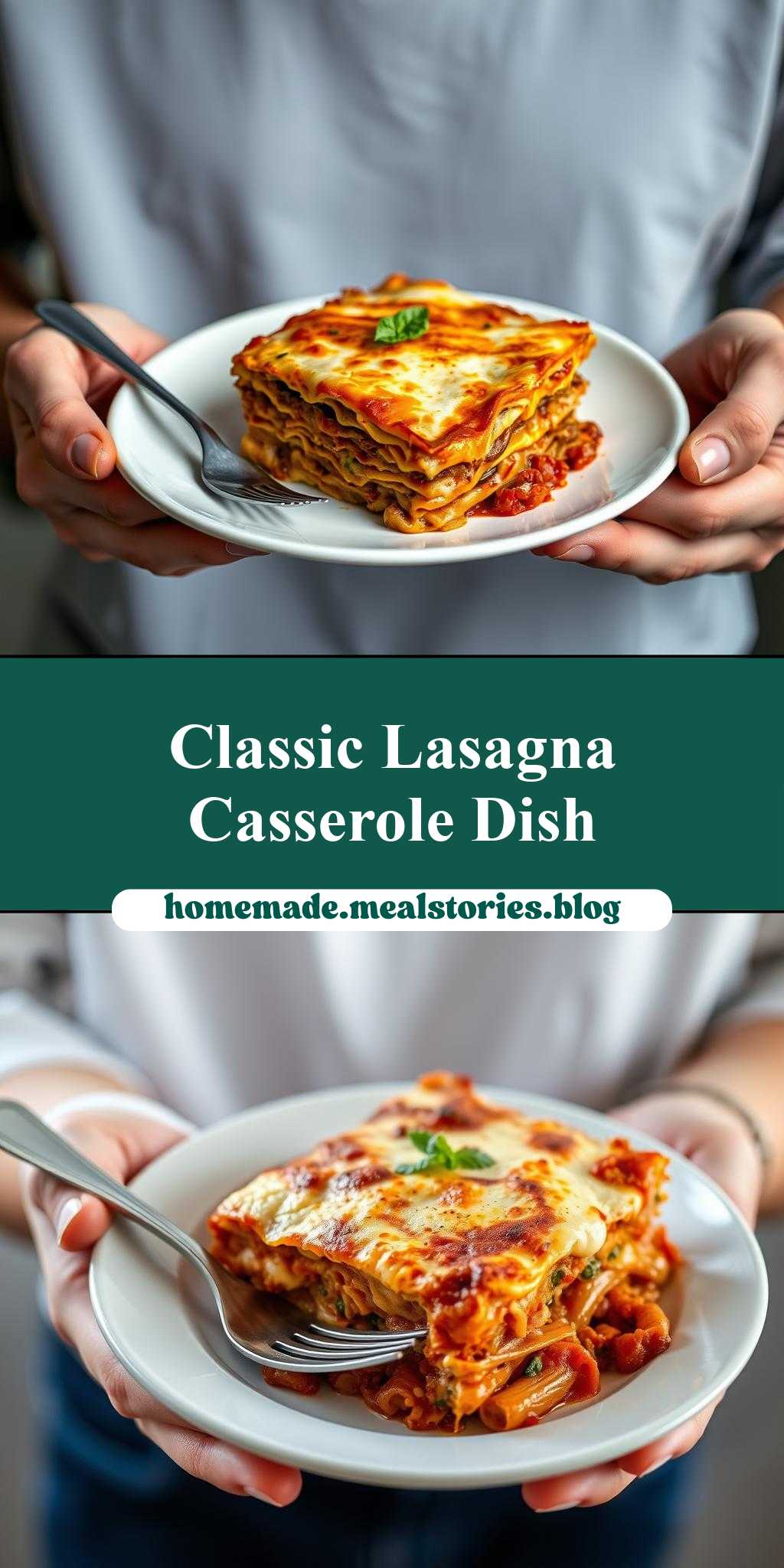
What’s the secret to a satisfying weeknight dinner? Layers of tender pasta, rich meat sauce and creamy ricotta cheese make this homemade lasagna casserole a family favorite, perfect for a quick and easy meal, try baking it soon and save this idea
a person holding a plate with lasagna casserole on it
Introduction
Imagine a dish that encapsulates the warmth and comfort of a home-cooked meal, yet is elegant enough to be the centerpiece of any gathering. The lasagna casserole, held lovingly by a person on a plate, is more than just a meal; it’s an experience. This classic Italian dish has been a staple for generations, not just for its rich flavors and satisfying textures, but also for its ease of preparation and the creativity it allows in using everyday ingredients. Whether you’re a seasoned chef or a beginner in the kitchen, this lasagna casserole recipe is sure to delight, offering a perfect blend of flavors, textures, and presentation that will leave everyone wanting more.
Why This Works
- Flavor balance and ingredient accessibility: The beauty of lasagna lies in its ability to balance a variety of flavors, from the savory meat sauce and the creaminess of ricotta cheese, to the tang of tomato sauce and the richness of melted mozzarella. Moreover, the ingredients are readily available and can be adjusted based on personal preferences and dietary needs.
- Ease of preparation: Despite its impressive presentation, lasagna casserole is surprisingly easy to prepare. The steps are straightforward, and the layering process, while it may seem daunting, is actually quite therapeutic and allows for a lot of creativity.
- Impressive results with minimal effort: For the amount of time and effort you put into making a lasagna casserole, the payoff is significant. It’s a dish that never fails to impress, whether you’re serving a family dinner or hosting a large gathering. The combination of flavors, textures, and the visually appealing layers make it a standout on any table.
Key Ingredients
The main ingredients in a classic lasagna casserole include ground beef or sausage for the meat sauce, onions, garlic, canned tomatoes, tomato paste, olive oil, salt, and pepper for flavor. For the cheese layers, you’ll need ricotta cheese, mozzarella cheese (both shredded and sliced), and parmesan cheese. Lasagna noodles are the base of the dish, and fresh basil adds a bright, fresh flavor. Practical substitutions can include using ground turkey or vegetarian options like mushrooms or spinach for the meat sauce, and dairy-free cheeses for those with dietary restrictions. The versatility of lasagna allows it to cater to a wide range of tastes and dietary needs.
Instructions
- Step 1: Begin by preparing your ingredients. Chop the onions and garlic, measure out the canned tomatoes and tomato paste, and cook the lasagna noodles according to the package instructions. Also, prepare your meat sauce by cooking the ground beef or sausage in a pan, then adding the onions, garlic, canned tomatoes, tomato paste, salt, and pepper. Let it simmer to allow the flavors to meld together.
- Step 2: Prepare the cheese mixture by combining ricotta cheese, mozzarella cheese, parmesan cheese, and a pinch of salt and pepper in a bowl. Mix well until all the ingredients are fully incorporated. This cheese mixture will add creaminess and richness to your lasagna.
- Step 3: Layer your lasagna in a baking dish. Start with a thin layer of the meat sauce on the bottom, followed by a layer of lasagna noodles. Then, spread half of the cheese mixture over the noodles, followed by half of the shredded mozzarella cheese. Repeat this process, starting with the meat sauce, then the noodles, the remaining cheese mixture, and finally the remaining mozzarella cheese. Top it all off with sliced mozzarella cheese for an extra melted, golden crust.
- Step 4: Cover your baking dish with aluminum foil and bake in a preheated oven at 375°F (190°C) for about 30 minutes. Then, remove the foil and continue baking for an additional 10-15 minutes, or until the cheese is melted and bubbly. Let it rest for a few minutes before slicing and serving. Garnish with fresh basil for a pop of color and freshness.
Handy Tips
- One of the most helpful tips for making lasagna is to not overcook the noodles. They should still have a bit of firmness to them, as they will continue to cook in the oven. Also, letting the lasagna rest before serving allows the juices to redistribute, making each slice more flavorful and cohesive.
- Consider using a variety of cheeses to create a unique flavor profile. Mixing different types of cheese can add depth and complexity to your lasagna.
- For a vegetarian or vegan version, substitute the meat sauce with a rich and flavorful vegetable sauce, and use dairy-free cheese alternatives. This way, everyone can enjoy the dish regardless of their dietary preferences.
Heat Control
Heat control is crucial when baking a lasagna casserole. The ideal temperature is 375°F (190°C), which allows for a gentle cooking process that won’t burn the cheese or overcook the noodles. The total baking time should be around 40-45 minutes, with the first 30 minutes covered with foil to prevent the top from burning and to allow the flavors to meld together. After removing the foil, bake for an additional 10-15 minutes, or until the top is golden brown and the cheese is bubbly. Signs of doneness include a heated through center, melted cheese, and a slightly golden crust on top.
Crunch Factor
The crunch factor in a lasagna casserole comes from the golden, crispy top layer of cheese and possibly from added crunchy elements like chopped nuts or crispy fried onions on top. To achieve this crunch, it’s essential to remove the foil during the last 10-15 minutes of baking, allowing the top to brown and crisp up. Additionally, using a broiler for a minute or two at the end can add an extra layer of crispiness, but be cautious not to burn the cheese.
Pro Kitchen Tricks
- One expert tip is to prepare your lasagna a day in advance and refrigerate it overnight. This allows the flavors to meld together even more, resulting in a richer, more complex taste. Just bake it the next day as instructed.
- Using high-quality ingredients, especially when it comes to the cheese and the tomatoes, can significantly elevate the dish. Freshly grated parmesan and high-quality canned tomatoes can make a noticeable difference in flavor.
- For easier serving and to prevent the lasagna from falling apart, let it rest for at least 10-15 minutes after baking. This allows the cheese to set and the layers to firm up, making it easier to slice and serve.
Storage Tips
- Leftover lasagna can be stored in the refrigerator for up to 3 days. It’s best to store it in an airtight container to preserve freshness. For reheating, simply place the desired portion in the oven at 350°F (175°C) for about 20-25 minutes, or until heated through.
- Lasagna can also be frozen for up to 3 months. It’s best to freeze it before baking, as this preserves the texture of the noodles and the cheese. When you’re ready to bake it, thaw it overnight in the refrigerator and then bake as instructed.
- When freezing, consider freezing individual portions for easier thawing and reheating. This makes it a great meal prep option for busy weeks.
Gift Packaging Ideas
If you’re considering gifting a lasagna casserole, perhaps for a new neighbor, a friend in need, or as a holiday gift, presentation is key. Consider baking it in a disposable aluminum baking dish for easy transport. Wrap the dish in plastic wrap or aluminum foil and then in a decorative towel or cloth for a cozy touch. You can also include a bag of garlic bread or a green salad kit to complement the meal. Add a personal touch with a handwritten note or a small plant on top, and you have a thoughtful, delicious gift that’s sure to be appreciated.
Flavor Variations
- Different spices: Adding a pinch of nutmeg or cinnamon can give your lasagna a unique twist. For a spicy version, consider adding red pepper flakes to the meat sauce.
- Creative toppings: Instead of the traditional mozzarella on top, consider using other cheeses like parmesan, feta, or even a dairy-free alternative. Adding some caramelized onions, roasted garlic, or sautéed mushrooms can also elevate the flavor.
- Ingredient swaps: For a vegetarian version, swap the meat sauce with a rich eggplant or mushroom sauce. For a gluten-free version, use gluten-free lasagna noodles. The possibilities are endless, allowing you to tailor the dish to your tastes and dietary needs.
Troubleshooting
- Texture problems: If your lasagna turns out too dry, it might be because the noodles were overcooked or the cheese wasn’t enough. Conversely, if it’s too soggy, the noodles might not have been cooked enough, or too much sauce was used. Finding the right balance is key.
- Ingredient replacements: If you’re missing an ingredient, don’t be afraid to substitute. For example, if you don’t have ricotta, you can use cottage cheese as a replacement. Just be aware that substitutions might slightly alter the flavor and texture.
- Over/undercooking signs: An overcooked lasagna will have dry, crispy noodles and burnt cheese. Undercooked lasagna will be soggy and lack flavor. Keeping an eye on the baking time and checking the lasagna periodically can help you achieve the perfect doneness.
FAQs
- Can I freeze it? Yes, lasagna casserole can be frozen for up to 3 months. It’s best to freeze it before baking for the best results.
- Is it gluten-free? Traditional lasagna noodles contain gluten, but you can easily make a gluten-free version by using gluten-free noodles. Be sure to check the ingredients of your sauces and cheeses as well to ensure they are gluten-free.
- Can I double the recipe? Yes, you can easily double or even triple the recipe if you’re serving a large crowd. Just ensure you have a baking dish large enough to accommodate the increased volume and adjust the baking time accordingly.
Conclusion
Making a lasagna casserole is not just about following a recipe; it’s about creating an experience. It’s about the joy of cooking, the love of sharing a meal with others, and the satisfaction of seeing a dish come together from simple, everyday ingredients. Whether you’re a seasoned cook or just starting out, this recipe is a great place to begin your culinary journey. Don’t be afraid to experiment, to try new flavors and ingredients, and to make the dish your own. And as you sit down to enjoy your beautifully crafted lasagna casserole, remember that the true magic happens not in the kitchen, but in the moments you share with the people you care about, over a delicious, home-cooked meal.